

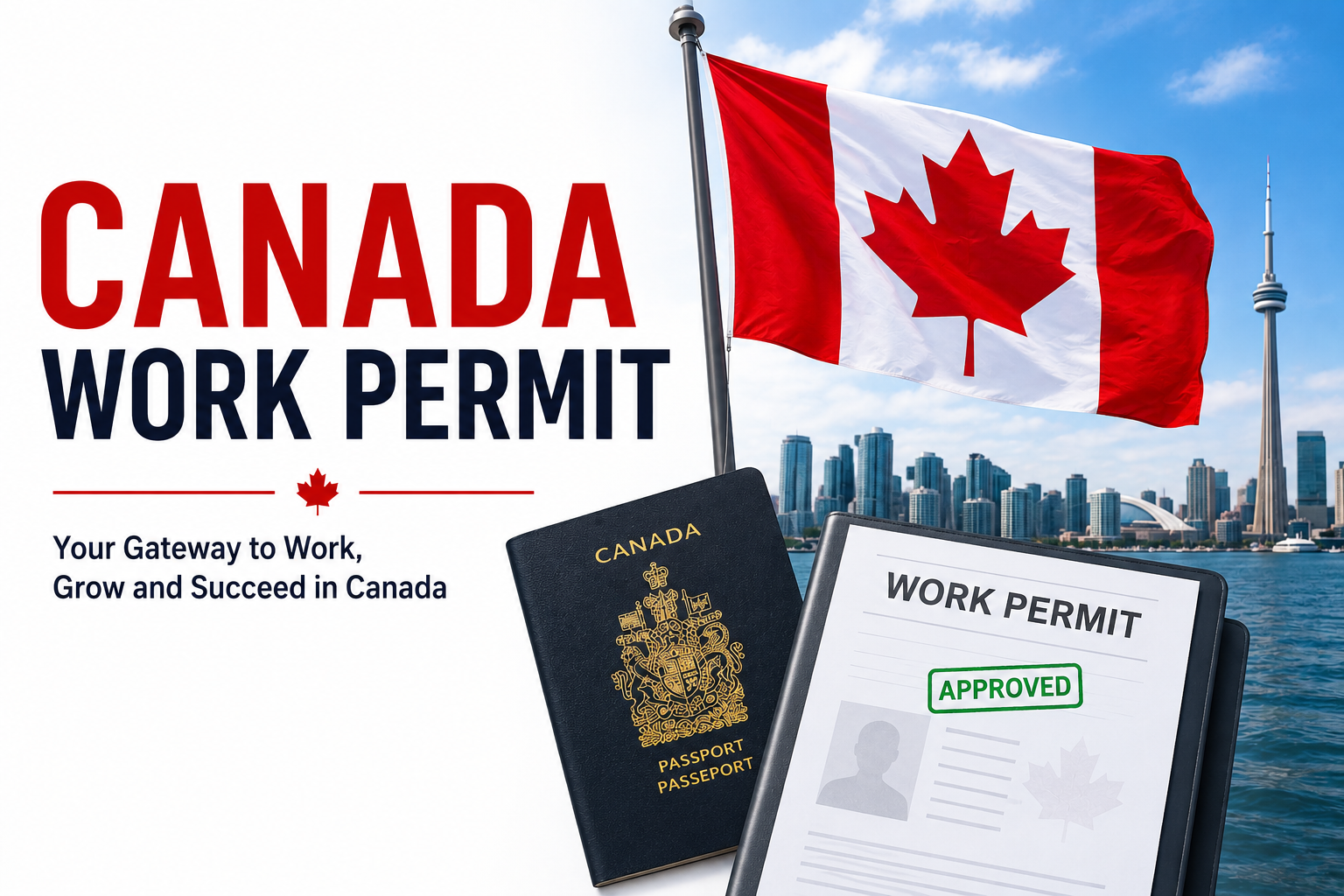
Working in Canada and want to upgrade your skills without going through another study permit application?
There is good news.
Under a temporary IRCC public policy, eligible work permit holders in Canada can now study a program lasting six months or less without applying for a study permit.
The policy took effect on September 4, 2026, and gives temporary foreign workers more flexibility to study while continuing their Canadian employment.
But there is a catch.
Your work permit needs to stay valid for the entire period of your studies. And if you are thinking about using the course to strengthen an Express Entry or permanent residence profile, there is another important rule you need to understand before enrolling.
What Changed for Work Permit Holders?
Previously, foreign workers often had to navigate additional immigration requirements when they wanted to pursue studies in Canada.
The new temporary measure creates an exemption for eligible workers who want to complete a short-term program.
Under the policy, a work permit holder can study for six months or less without a study permit.
The authorization can last for up to six months or until the person’s work permit expires, whichever comes first.
That means a worker with a valid permit can potentially complete short-term education, professional training or skills development without applying for a separate study permit.
For workers already established in Canada, this can make upgrading their qualifications considerably easier.
Who Can Study Without a Study Permit?
The eligibility rules are relatively straightforward, but missing one condition can change the answer completely.
You generally need to meet two key requirements:
- You must hold a valid Canadian work permit
- Your program or course must last six months or less
The studies can be full-time or part-time.
However, the work permit needs to remain valid throughout the period of study.
This is the part workers should pay close attention to.
If your work permit expires halfway through your course, you cannot simply rely on a pending immigration application to maintain your eligibility under this policy.
Your Work Permit Expiry Date Matters
Imagine you find a five-month professional course that looks perfect for your career.
Your work permit expires in three months.
You apply to extend your work permit.
It might seem logical to assume that you can start the course because your extension application is already in progress.
That’s not how this exemption works.
IRCC says the work permit must be valid for the entire period of study.
Simply applying for:
- A work permit extension
- A new work permit
- A study permit
- An extension of visitor status
does not automatically preserve eligibility for the study exemption while the application is pending.
So before paying tuition or registering for a course, check your work permit expiry date.
A little planning here can prevent a very unnecessary immigration headache.
How Long Can You Study Under the New IRCC Policy?
The maximum study period is six months.
However, that does not mean every eligible worker automatically gets six months.
Your authorization lasts for the shorter of:
Six months OR the remaining validity of your work permit.
For example, if your work permit is valid for eight more months, you may qualify for a program of up to six months.
If your work permit is valid for only four more months, your ability to study under this policy is limited by that expiry date.
This is why the length of your program and your work permit validity need to be considered together.
Can You Study Full-Time?
Yes.
The temporary policy allows eligible work permit holders to study on either a full-time or part-time basis, provided the program meets the six-month limit and the other requirements are satisfied.
That gives workers more flexibility.
Someone working a regular schedule might choose evening or part-time classes, while another worker could potentially complete a short full-time program.
The important point is that the immigration exemption is based on the program’s duration and the worker’s eligibility, not simply whether the studies are full-time or part-time.
What About Workers in Quebec?
If you are working in Quebec, the policy can still apply.
Eligible work permit holders studying in Quebec under this temporary measure do not need a Quebec Acceptance Certificate (CAQ) for those studies.
That removes another potential administrative step for workers who want to pursue short-term education while holding a valid work permit.
However, workers should still verify that both their work permit and intended program meet the applicable requirements before starting their studies.
What Kind of Study Can You Pursue?
The policy is designed to help temporary foreign workers upgrade their skills, gain additional credentials and potentially move into higher-skilled occupations.
That could make short-term education particularly useful for workers who want to improve their career prospects without immediately transitioning into a longer academic program.
Potential reasons for studying could include:
- Developing new professional skills
- Completing short-term training
- Earning a credential
- Working toward a professional licence
- Preparing for a higher-skilled position
- Improving employment opportunities in Canada
IRCC has specifically highlighted labour needs in areas such as health care.
The bigger picture is clear: Canada wants temporary workers already in the country to have more opportunities to build skills that match labour-market needs.
Can You Study While Working?
Yes, the policy is specifically designed around people who already hold work permits.
However, the immigration exemption does not automatically change your employment arrangement.
If your studies require you to reduce your working hours, change your schedule or take time away from work, that is something you need to discuss with your employer.
Your ability to study under the immigration policy does not mean your employer is automatically required to modify your employment terms.
So before signing up for a course, look at both sides of the equation:
Immigration eligibility + employment arrangements.
Both matter.
What If Your School Asks for Proof?
Some educational institutions may want confirmation that you are allowed to study without a study permit.
In that situation, IRCC says eligible workers can provide their valid work permit as evidence of their eligibility under the policy.
Keep your documentation organized.
Your work permit is not just proof that you can work in Canada. Under this temporary measure, it can also establish your eligibility for short-term studies.
What About Co-Op Programs?
This is where things become slightly more complicated.
If your short-term studies include a co-op placement, you may need an additional employer-specific work permit in certain situations.
For example, if the co-op employer or occupation is different from the one associated with your current work authorization, another work permit may be required before you begin the placement.
There is an important exception for open work permit holders.
Open work permit holders do not need the additional permit in that situation.
So if you are considering a course that includes practical training or a co-op component, do not assume the six-month study exemption automatically covers every part of the placement.
Check the work authorization requirements before starting the co-op.
The Big Catch for Express Entry Applicants
Now for the part that could seriously matter if your end goal is Canadian permanent residence.
Studying under this policy does not mean every hour you spend working during your studies will strengthen your Express Entry profile.
IRCC states that work experience gained while studying full-time under this policy does not count toward Canadian Experience Class eligibility.
It also does not earn Canadian work experience points under the Express Entry Comprehensive Ranking System (CRS).
That is a major consideration for workers who are carefully building their Canadian work experience for permanent residence.
In simple terms:
If your main goal is career development, a short course could be extremely useful.
But if you are relying on Canadian work experience to qualify under the Canadian Experience Class or increase your Express Entry CRS score, you need to understand how full-time studies could affect that strategy.
Don’t trade immigration points for a course without calculating the consequences first.
Should You Take a Short Course Under This Policy?
For some workers, absolutely.
For others, it may not be the smartest move right now.
Ask yourself:
Is the course going to improve my career?
Does my work permit remain valid for the entire program?
Will studying full-time affect the Canadian work experience I am relying on for Express Entry?
Does the program include a co-op placement?
Will my employment schedule need to change?
These questions are much more important than simply asking whether you can study without a study permit.
Being eligible to study and having a good immigration strategy are not always the same thing.
When Does This Temporary Policy End?
The measure is currently scheduled to remain in effect until December 31, 2027.
However, IRCC has stated that the policy can be revoked at any time without prior notice.
That means workers should not treat the exemption as a permanent change to Canada’s immigration rules.
The policy follows an earlier temporary measure introduced in 2023, which expired on June 27, 2026.
The new policy therefore provides another opportunity for eligible foreign workers to pursue short-term education while working in Canada.
What This Means for Temporary Foreign Workers
For eligible work permit holders, this policy can remove a major barrier.
You may be able to gain additional skills, complete short-term training or work toward a credential without applying for a separate study permit.
But don’t focus only on the headline:
“Work permit holders can study for six months.”
The real story is in the conditions.
Your work permit must remain valid throughout the studies. Your course must meet the duration requirement. Co-op arrangements can have separate rules. And full-time studies can affect how your Canadian work experience is counted for Express Entry and the Canadian Experience Class.
Those details can make a huge difference.
Planning Your Next Step?
If you are a temporary foreign worker in Canada, the best immigration strategy is not always about doing more.
Sometimes, it is about doing the right thing at the right time.
A short course could strengthen your career and help you qualify for better opportunities. But if you are also working toward Canadian permanent residence, you need to understand how your education, work experience and immigration status fit together.
VisaNexa can help you assess your situation, understand the latest IRCC rules for work permit holders, and determine how short-term studies may fit into your broader Canadian immigration plan.
The Bottom Line
The new IRCC policy gives eligible Canadian work permit holders more freedom to pursue short-term education.
If you have a valid work permit and want to complete a program lasting six months or less, you may be able to study without applying for a study permit.
But check your work permit expiry date before enrolling.
And if Express Entry or Canadian permanent residence is your ultimate goal, think beyond the course itself. Full-time studies under this policy can affect whether your work experience counts toward Canadian Experience Class eligibility and Express Entry CRS work-experience points.
The opportunity is real.
Just make sure the strategy is right for you before you hit “enroll.”