


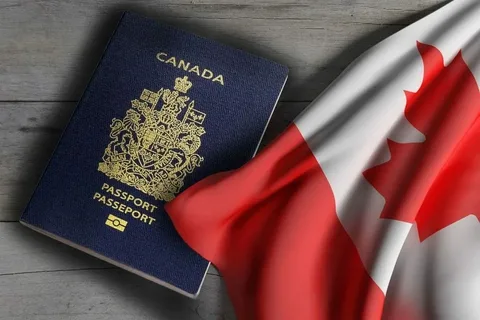
Imagine getting accepted into a Canadian college or university, preparing for your first semester, and then discovering that your Canadian citizenship certificate could take more than two years to arrive.
That’s a serious problem.
For some students, citizenship status isn’t just paperwork. It can affect tuition fees, enrollment, deadlines, and their ability to start an academic program on time.
The good news? Immigration, Refugees and Citizenship Canada (IRCC) has an urgent processing pathway for certain proof of citizenship applications when applicants need their citizenship documentation to begin studying in Canada.
This means eligible students may be able to request an urgent Canadian citizenship application instead of simply waiting in the standard processing queue.
But there’s an important catch: urgent processing is not automatic, and approval is not guaranteed.
Here’s what students and families need to know.
Why Is Canada Fast-Tracking Citizenship Applications for Students?
Standard Canadian citizenship certificate processing times have become extremely long.
Following changes introduced under Bill C-3, the number of people seeking to establish Canadian citizenship increased significantly.
Bill C-3 changed Canada’s citizenship by descent rules by removing the first-generation limit for certain people born abroad before December 15, 2025.
That opened the door for more people with Canadian family connections to establish citizenship.
The result?
More applications.
More documentation to review.
And longer processing queues.
By August 2026, standard proof-of-citizenship processing times had reached approximately 25 months.
For someone simply waiting to confirm their status, that’s frustrating.
For a student whose semester begins in September, it could be a major problem.
That’s why IRCC maintains an urgent processing pathway for specific situations, including applicants who need proof of citizenship to attend an educational institution in Canada.
Who Can Request Urgent Canadian Citizenship Processing?
Not everyone can simply ask IRCC to move their application to the front of the line.
Urgent processing is designed for specific circumstances.
One of those circumstances involves education in Canada.
A person applying for proof of Canadian citizenship may request urgent processing if they need their citizenship certificate to begin or continue their studies at a Canadian educational institution.
This can be particularly relevant to people who:
- Were born outside Canada
- May already be Canadian citizens
- Are waiting for proof of Canadian citizenship
- Have been accepted into a Canadian school
- Need their citizenship status confirmed before enrollment
- Face an upcoming academic deadline
- Need their citizenship certificate for tuition purposes
However, submitting an urgent request doesn’t mean IRCC will automatically approve it.
An immigration officer reviews the circumstances and supporting evidence before deciding whether the application qualifies for expedited handling.
What Documents Do Students Need for Urgent Processing?
This is where preparation becomes extremely important.
If you’re requesting urgent citizenship processing for education, don’t simply write, “I need my certificate quickly because I am a student.”
You need evidence.
IRCC expects applicants to provide documentation demonstrating the urgency of the situation.
Your submission should generally include a complete citizenship application package along with documents such as:
- A cover letter identifying the urgent education request
- A detailed explanation of why urgent processing is necessary
- An acceptance letter from the Canadian educational institution
- Tuition information or a tuition summary
- Relevant enrollment documentation
- Evidence of upcoming academic deadlines
- Documents supporting your Canadian citizenship claim
The stronger the evidence, the easier it is for an officer to understand why waiting through the regular Canadian citizenship processing time could cause a serious problem.
Your Acceptance Letter Matters
Your school’s acceptance letter can be particularly important.
It should clearly show:
- Your name
- The educational institution
- Program details
- Start date
- Enrollment information
- Any relevant deadline
If your school has issued a tuition invoice or fee assessment, include that as well where appropriate.
The goal is to demonstrate a real and immediate educational need.
Can Students Really Get a Canadian Citizenship Certificate Faster?
Potentially — but there’s no guarantee.
This is one of the biggest misunderstandings surrounding IRCC urgent processing.
Urgent processing isn’t the same thing as guaranteed priority service.
IRCC reviews the request and decides whether the circumstances justify accelerated handling.
Even if you provide an acceptance letter, your request may not be approved.
And even if urgent processing is approved, applicants shouldn’t assume the citizenship certificate will arrive before a specific date unless IRCC confirms that outcome.
So if your university semester begins in September, don’t wait until August to start thinking about citizenship documentation.
The earlier you prepare, the better.
Why Citizenship Status Can Affect Canadian Tuition
Here’s where this becomes more than an immigration paperwork issue.
Your citizenship status can affect how a Canadian institution classifies your tuition.
Canadian citizens generally aren’t charged the same international student rates that apply to many students coming to Canada from abroad.
Depending on the institution and province, the difference can be substantial.
A student waiting for a Canadian citizenship certificate for university may therefore face a financial issue in addition to a documentation issue.
Some institutions may require valid citizenship documentation before applying domestic tuition rates.
Policies vary by school and province, so students should speak directly with their registrar or student services department.
Ask questions such as:
“What proof of citizenship do you require?”
“Can my tuition classification be changed after I receive my citizenship certificate?”
“Can the difference be refunded if my citizenship is confirmed later?”
Don’t assume every university follows the same policy.
What Happens If Your Citizenship Certificate Arrives After Classes Start?
This is where planning can save you a lot of stress.
Suppose your program begins in September.
Your proof of Canadian citizenship application is still being processed.
Your school requires proof of citizenship before granting domestic tuition rates.
What happens?
The answer depends on the institution’s policies.
Some schools may have procedures for updating a student’s status later. Others may require documentation by a specific deadline.
That’s why applicants should contact the school’s registrar or international/student services department before submitting their urgent request.
Ask whether the institution allows:
- Later submission of citizenship documents
- Retroactive tuition adjustments
- Refunds for overpaid international tuition
- Temporary tuition classification
- Extensions on documentation deadlines
Getting the answer in writing can be extremely helpful.
Bill C-3 Is One Reason Citizenship Applications Are Taking Longer
The current processing pressure didn’t appear out of nowhere.
Bill C-3 significantly changed Canada’s citizenship-by-descent framework.
Before the changes, the first-generation limit created restrictions for some people born outside Canada.
The amendments that came into effect on December 15, 2025, changed the rules for certain people born abroad and allowed citizenship to be established across additional generations in qualifying circumstances.
That meant many people who had previously been unable to establish Canadian citizenship suddenly had a reason to apply.
The United States saw particularly significant interest, but the impact extends beyond one country.
People around the world are now reviewing their family histories and determining whether they may already have Canadian citizenship.
For students, that can create a particularly important situation.
Someone who has always considered themselves an international student may discover that they are actually a Canadian citizen.
But discovering citizenship and proving citizenship are two different things.
Are You a Canadian Citizen or Do You Need Immigration?
This distinction is critical.
If you’re already a Canadian citizen, you don’t need to immigrate to Canada through:
- Express Entry
- A Provincial Nominee Program
- A study permit
- A work permit
- Family sponsorship
Instead, you need to establish or prove your citizenship.
That’s why a citizenship certificate application can be so important.
The certificate isn’t necessarily what makes you Canadian.
It can serve as official proof that you are already a Canadian citizen.
For a student, this distinction could completely change the way they approach studying in Canada.
What If You Were Born Outside Canada?
Being born outside Canada doesn’t automatically mean you’re not Canadian.
Canadian citizenship can be acquired in different ways, including citizenship by descent in qualifying circumstances.
For example, a person born outside Canada may potentially have Canadian citizenship because of a Canadian parent or, under the updated rules, through certain additional family connections.
The specific rules depend on:
- Your date of birth
- Your parent’s citizenship
- Your family’s citizenship history
- How citizenship was acquired
- Whether the first-generation limit applies
- The circumstances of each generation
That’s why students shouldn’t rely solely on online calculators or family assumptions.
Your actual family history matters.
How to Request Urgent Processing for Education
If you’re eligible to request urgent handling, preparation should begin before submitting the application.
Step 1: Confirm Your Citizenship Claim
First, determine why you believe you’re a Canadian citizen.
Gather documents showing your Canadian connection and family relationships.
Step 2: Complete the Citizenship Application
Prepare the appropriate proof of citizenship application, including the required forms and supporting evidence.
Make sure your citizenship claim is properly documented.
Step 3: Obtain Your School Documents
Request official documentation from your Canadian educational institution.
This may include:
- Acceptance letter
- Enrollment confirmation
- Tuition summary
- Tuition invoice
- Program start date
- Registration deadline
Step 4: Write the Urgent Processing Explanation
Explain clearly:
Why do you need urgent processing?
When does your program begin?
What deadline are you facing?
What happens if your citizenship certificate isn’t available?
Keep the explanation factual and supported by documents.
Step 5: Submit the Urgent Request With Your Application
Include the required urgent-processing documentation with your citizenship package.
IRCC will review the request and determine whether accelerated processing is appropriate.
What Can Cause Problems With an Urgent Citizenship Application?
Urgent doesn’t mean incomplete.
In fact, incomplete documentation can create additional problems.
Common issues include:
- Missing birth certificates
- Inconsistent names
- Missing evidence of family relationships
- Unclear citizenship history
- Missing school documents
- No evidence of an academic deadline
- Generic explanations of urgency
- Incorrect forms
- Missing supporting documents
If you’re claiming citizenship through multiple generations, documentation becomes even more important.
A missing document connecting one generation to the next can complicate the entire application.
Can an Immigration Professional Help?
Yes, particularly when the citizenship history is complicated.
An RCIC immigration consultant or Canadian immigration lawyer can help review your circumstances and documentation before you submit the application.
This can be useful when:
- Your citizenship claim involves multiple generations
- Your parents were born outside Canada
- Your family has complex citizenship histories
- Names changed between documents
- Records are missing
- You have an urgent academic deadline
- You’re unsure whether you qualify for urgent processing
Professional guidance cannot guarantee that IRCC will approve urgent processing.
But it can help you identify weaknesses before submitting your application.
What Students Should Do Right Now
If you’re planning to study in Canada and believe you’re already a Canadian citizen, don’t wait until the semester starts.
Start with these five actions:
1. Check your citizenship eligibility.
2. Gather documents proving your Canadian connection.
3. Contact your school about citizenship documentation and tuition classification.
4. Obtain your acceptance letter and tuition documents.
5. Prepare a complete urgent-processing request if your circumstances qualify.
The biggest mistake is assuming that an urgent request guarantees a fast result.
It doesn’t.
The second biggest mistake is waiting until the last minute.
The Bottom Line
Canada’s citizenship processing queues are long.
For many applicants, waiting around 25 months for proof of citizenship can be frustrating.
For a student with a Canadian university or college waiting on the other side, it can be much more serious.
That’s why IRCC provides an urgent processing pathway for qualifying educational situations.
But the process isn’t a shortcut around the rules.
You still need to establish your Canadian citizenship claim, submit the required documents, demonstrate the educational urgency, and understand that IRCC does not guarantee approval of an urgent request.
If you think you may already be Canadian, don’t automatically assume you need a study permit or an immigration pathway.
First ask the bigger question:
Do you actually need to immigrate to Canada — or do you need to prove that you’re already Canadian?
VisaNexa can help you understand your Canadian citizenship and immigration options, review your situation, and identify the documentation you may need before moving forward.
Because when your university semester is approaching, “I’ll figure it out later” can become a very expensive strategy.
Frequently Asked Questions
Can students get urgent processing for Canadian citizenship?
Potentially. IRCC has an urgent processing pathway for certain proof-of-citizenship applicants who need documentation for educational purposes in Canada. Approval is not guaranteed.
How fast can IRCC process an urgent citizenship application?
There is no guaranteed processing time for urgent requests. IRCC reviews each request individually and determines whether expedited processing is justified.
What documents are needed for urgent citizenship processing?
Applicants should submit a complete citizenship application along with evidence of the educational need, such as an acceptance letter, tuition information, and a detailed explanation of why urgent processing is required.
Why are Canadian citizenship applications taking so long?
Processing times increased following changes to Canada’s citizenship-by-descent rules, including amendments introduced through Bill C-3. The resulting increase in proof-of-citizenship applications has contributed to longer queues.
Can a Canadian citizenship certificate affect university tuition?
Potentially. Canadian citizens generally receive different tuition treatment from international students, but policies vary by institution and province. Students should confirm requirements directly with their school.
Can I study in Canada while waiting for proof of citizenship?
This depends on your individual circumstances, immigration status, and the requirements of your educational institution. If you believe you are already Canadian, speak with the institution and obtain appropriate professional advice about your status.
What is proof of Canadian citizenship?
Proof of Canadian citizenship is official documentation confirming that a person is a Canadian citizen. A citizenship certificate is commonly used as proof of citizenship.
Does Bill C-3 affect students?
It can. Bill C-3 changed citizenship-by-descent rules and may allow some people born abroad to establish Canadian citizenship under circumstances that previously did not qualify. Students who may already be Canadian can benefit from determining their status before treating themselves as international students.
Can VisaNexa help with a Canadian citizenship application?
VisaNexa can help applicants understand Canadian citizenship and immigration processes, identify documentation requirements, and determine what steps may be appropriate based on their circumstances.