


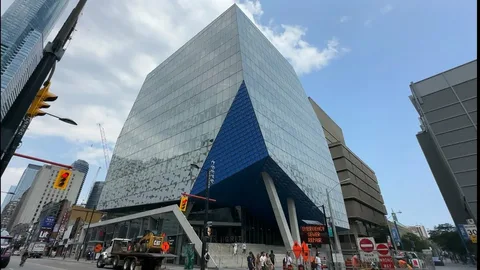
Choosing a Canadian university is about more than rankings, tuition fees and a shiny campus brochure.
Students need to know they will be safe, respected and heard.
That is why the growing controversy surrounding Toronto Metropolitan University (TMU) deserves attention — particularly for students and families considering studying in Toronto.
Recent scrutiny has focused on allegations of antisemitism, campus tensions, student-group conflicts and how the university responds to protests and incidents involving campus safety. TMU has also commissioned external reviews examining specific incidents and its policies around freedom of expression, campus safety and security.
The issue is complicated. There are competing perspectives, ongoing investigations and legal claims, so prospective students shouldn’t reduce the situation to a social-media headline.
But they should pay attention.
Why Is Toronto Metropolitan University Facing Scrutiny?
The controversy isn’t based on one isolated incident.
TMU has faced repeated concerns surrounding campus events, student groups, antisemitism and broader tensions connected to the Israel-Palestine conflict.
In response to incidents in September and November 2025, TMU appointed retired Ontario Court of Appeal Justice Mary Lou Benotto to conduct an external review. Her mandate includes examining what happened, how TMU manages protests and events, and how the university balances freedom of expression with campus safety and orderly operations.
That distinction is important.
The review is not simply an investigation into one student’s experience. It also looks at university policies, procedures and practices relating to expression, campus safety and security.
For students, those issues can directly affect daily campus life.
What About the Antisemitism Concerns?
Antisemitism has become one of the most serious issues raised in connection with TMU.
A separate external review, led by retired Nova Scotia Chief Justice J. Michael MacDonald, examined an open letter involving students at the Lincoln Alexander School of Law. The report was released by TMU after an extensive review and consultation process.
The report itself examined difficult questions around freedom of expression and antisemitism, including how antisemitism should be understood within the university’s policies.
At the same time, Jewish students and community members have raised concerns about whether the university has done enough to create a safe and inclusive environment.
Those concerns have also moved beyond campus discussions.
In April 2026, the Centre for Israel and Jewish Affairs reported that a student had filed a statement of claim against TMU alleging that the university failed to adequately protect Jewish students from antisemitism. These are allegations in an ongoing legal matter, not findings of fact by a court.
That distinction matters when evaluating the situation.
TMU Says It Has Taken Steps
It would be inaccurate to suggest that the university has done nothing.
TMU says it has introduced measures addressing antisemitism, Islamophobia and anti-Palestinian sentiment, including leadership training, updated discrimination and harassment policies, changes to event-booking procedures, increased engagement with Jewish students and additional counselling support.
The university has also commissioned external reviews rather than relying solely on internal processes.
So the real question isn’t simply:
“Has TMU responded?”
It’s:
“Have those responses been effective enough for students who feel unsafe or marginalized?”
That is a question that ongoing reviews, investigations and student experiences will help answer.
Why Should International Students Care?
Here’s where this becomes particularly relevant for international students in Canada.
If you’re spending tens of thousands of dollars on tuition, accommodation, insurance and living expenses to study in Toronto, your university choice deserves more research than simply checking its QS ranking or program reputation.
International students should investigate:
- Campus safety policies
- Student support services
- Discrimination and harassment procedures
- Mental-health resources
- Student code of conduct
- Complaint and reporting mechanisms
- Housing and transportation
- Program quality
- Tuition and living costs
- Study permit requirements
- Graduation and employment opportunities
Why?
Because changing universities after arriving in Canada can be complicated and expensive.
Your university isn’t just where you attend lectures.
It’s where you’re going to live, study, build relationships and spend a significant part of your Canadian experience.
Don’t Let a Viral Headline Make Your Decision
There’s another trap international applicants need to avoid.
You see a headline saying a Canadian university is a “disgrace,” and suddenly the entire institution appears unsafe.
Or you see a university statement saying everything is being handled, and you assume there is no problem.
Neither approach is smart.
Look at the evidence.
TMU’s external review specifically addresses campus incidents, freedom of expression, safety and security.
The university has also publicly outlined measures it says it has taken to address concerns around hate and discrimination.
Meanwhile, student groups and individuals have raised their own concerns, and some disputes have resulted in independent investigations or legal proceedings.
For a prospective student, the smart move is to consider all sides before making a major financial and immigration decision.
What Should Prospective Students Do Before Applying?
If TMU is on your shortlist, don’t immediately remove it — but don’t blindly choose it either.
Do your homework.
Start with TMU’s published policies and external review information. Look at how the university handles campus safety, discrimination, harassment, protests and student complaints.
Then compare TMU with other universities in Toronto and across Ontario.
Ask:
How does this university handle controversial campus events?
Where do students report discrimination?
What happens when a student group violates university or student-union policies?
What mental-health and counselling support is available?
How transparent is the institution when serious incidents occur?
These questions matter for domestic students.
They matter even more when you’re moving thousands of kilometres from home.
What Does This Mean for Canadian Study Permit Applicants?
The TMU controversy does not automatically change Canada’s study permit requirements.
International students still need to meet the applicable requirements established by Immigration, Refugees and Citizenship Canada (IRCC).
That includes requirements surrounding admission, financial support, temporary residence and other applicable study permit criteria.
So don’t confuse a university’s campus controversy with an immigration policy change.
They are separate issues.
However, your choice of Designated Learning Institution (DLI) is still important because international students need to attend an eligible institution and comply with the conditions attached to their study permit.
Before paying a deposit or submitting a study permit application, verify current information through official Canadian government sources.
The Bigger Lesson for International Students
The TMU controversy highlights something that often gets ignored in the rush to study in Canada.
Choosing a university is also choosing an environment.
Students naturally focus on:
“Is the program good?”
“How much is tuition?”
“Can I get a post-graduation work permit?”
“What are my career opportunities?”
Those questions are important.
But add another one:
“Will I feel safe and supported on this campus?”
That’s not an emotional extra.
It’s part of making an informed education decision.
The Bottom Line
The debate surrounding Toronto Metropolitan University, antisemitism, campus safety and freedom of expression is complex, with external reviews, institutional responses, student concerns and ongoing legal matters all forming part of the picture.
Calling the university a “disgrace” is a strong opinion, not an established fact.
But the concerns being raised are serious enough that students shouldn’t ignore them.
If you’re considering TMU as an international student, don’t make your decision based on one article, one social-media post or one university statement.
Research the policies. Read the reviews. Understand the support systems. Compare institutions. And verify your Canada study permit requirements separately through official sources.
Because studying in Canada is a major investment.
Your university choice should be based on more than a degree. It should be based on the kind of environment you’re choosing to spend the next several years in.