


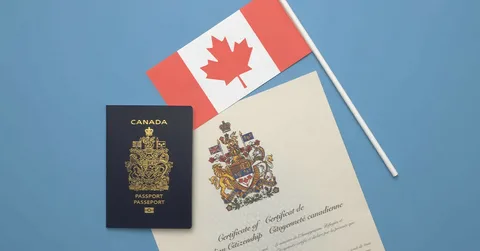
Think submitting more documents automatically makes your Canadian citizenship application stronger? Think again. 🇨🇦
For people applying for Canadian citizenship by descent, the issue isn’t always how many documents you submit. It can come down to what those documents actually prove.
IRCC is using a two-tier approach to assess evidence: primary documents and secondary documents. And if you’re trying to prove a Canadian family connection across several generations, understanding the difference could save you from a major problem.
Primary vs. Secondary Evidence: What’s the Difference?
The basic idea is simple.
Primary documents carry stronger evidentiary weight because they directly establish legal status, birth, or parentage.
Examples can include:
- Canadian provincial or territorial birth certificates
- Foreign birth certificates showing parent-child relationships
- Canadian citizenship certificates
- Canadian naturalization certificates
- Certificates of Registration of Birth Abroad
- Certificates of Retention of Canadian Citizenship
- Certain historical Canadian immigration and status records
Secondary documents can help support your claim, but they generally don’t carry the same weight on their own.
These may include:
- Baptismal records
- Hospital birth records
- Marriage certificates
- Death certificates
- Census records
- Military records
- Passports
- Boat manifests
- Physician or midwife statements
- Canada Gazette records
Here’s the important part:
More secondary documents don’t necessarily replace one missing primary document.
Your Family Tree Needs Evidence at Every Generation
This is where citizenship by descent Canada applications can become complicated.
If you’re claiming citizenship through a Canadian parent, grandparent, or earlier ancestor, you need to establish the connection between each generation.
Think of it like a chain:
You → Parent → Grandparent → Canadian Ancestor
If one link is supported only by weak or indirect evidence, your entire lineage claim can become harder to establish.
For applicants researching older generations, this can be particularly challenging because civil registration systems were different decades ago, records may have been lost, and surnames or dates may not match perfectly.
A Genealogy Website Isn’t Enough
Found your ancestor on an online genealogy database?
Great—but don’t assume that screenshot proves your Canadian citizenship claim.
Third-party genealogy websites, commercial databases, online family trees, and similar sources may help you find records, but they are not necessarily the original authority that issued the document.
The stronger approach is to obtain records directly from the relevant government authority, provincial archive, territorial registry, or other original issuing body wherever possible.
That distinction matters when you’re building a Canadian citizenship application based on ancestry.
Older Citizenship Claims Can Be More Complicated
Applicants tracing citizenship through older Canadian ancestors may face additional challenges.
Historical records can involve different legal categories, including British subject status, naturalization records, landed immigrant records, or historical documentation connected to Newfoundland and Labrador.
That’s why applicants pursuing Canadian citizenship by descent shouldn’t simply collect every document they can find and upload everything.
Instead, build the evidence generation by generation.
Ask:
Who is the Canadian ancestor?
How does each generation connect to the next?
What primary document proves each relationship?
Where is a primary document missing?
That approach makes it much easier to identify gaps before submitting your application.
What Should You Do Before Applying?
If you’re preparing a proof of Canadian citizenship application, audit your documents before submitting.
Start by creating a family-lineage checklist and identify the strongest document available for every generation.
If a generation relies only on a baptismal certificate, census record, military file, or another secondary source, investigate whether an official civil record can be obtained.
Don’t confuse having a lot of paperwork with having the right evidence.
At VisaNexa, applicants dealing with complex citizenship-by-descent cases should focus on building a clear documentary chain rather than simply uploading everything they find.
The Bottom Line
When you’re proving Canadian citizenship through ancestry, quality and evidentiary strength matter more than quantity.
One missing link in your family chain can create a much bigger problem than a thin application folder.
So before you submit your Canadian citizenship by descent application, trace the lineage generation by generation and make sure every connection is properly supported.
Don’t just prove that your ancestor existed. Prove how that ancestor connects to you. 🇨🇦