


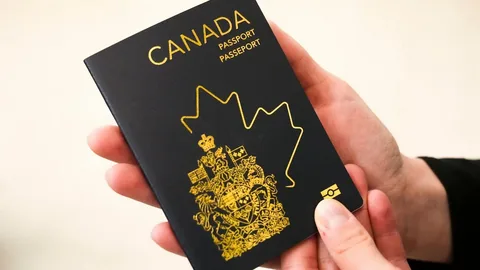
A Canadian passport is more than a travel document. It represents a person’s legal identity and confirms their Canadian citizenship. But what happens when someone obtains one using a false identity and repeatedly crosses international borders without being detected?
A Calgary court has delivered its answer. A 22-year-old Ghanaian man who used a fraudulent Canadian passport to enter and leave Canada 16 times has received a two-year prison sentence. The case highlights the serious consequences of citizenship fraud, false identity documents, and misrepresentation in Canada’s immigration system.
For temporary residents, permanent residence applicants, and anyone applying for Canadian citizenship, this case is a reminder that document accuracy is not optional.
Canadian Passport Fraud Case: What Happened in Calgary?
Jefferson Zormelo, a 22-year-old Ghanaian national, was sentenced to two years in prison after pleading guilty to violating the Canadian Citizenship Act.
According to the reported court proceedings, Zormelo originally entered Canada in 2021 on a study permit. He later obtained identification documents, including proof of Canadian citizenship, under a false identity.
That documentation eventually allowed him to obtain a Canadian passport in December 2024 under the name Mitchell Leblanc.
The passport was not issued in his real name.
Over the following 15 months, he used the fraudulent passport to cross Canada’s borders 16 times through airports in Montreal, Toronto, and Halifax.
His activities came to light in April 2026, when he presented another fraudulent document, a permanent resident card bearing the same false identity, at the United States Consulate in Calgary.
Canada Border Services Agency officers arrested him after the incident exposed the false identity and the passport fraud.
Why Did the Court Sentence Him to Two Years in Prison?
The court treated the offence as a serious attack on the integrity of Canada’s citizenship system.
Zormelo pleaded guilty earlier in 2026. Crown prosecutor Tyler Lord requested a five-year prison sentence, arguing that the repeated use of fraudulent documents made the offence particularly serious.
Justice Karen Molle imposed a two-year sentence in Calgary.
The judge emphasized the damage such conduct causes to public confidence in the Canadian citizenship regime.
With credit for time already spent in custody, approximately 14 months of the sentence remained to be served at the time of the report.
The report also states that Zormelo was ordered removed from Canada.
This was not a case involving one incorrect document or an accidental error on an immigration form. It involved a false identity, fraudulent citizenship documentation, a passport obtained through that identity, and repeated international travel.
How Did a False Identity Lead to a Canadian Passport?
The case followed a chain of fraudulent documentation.
Here is how the reported sequence unfolded:
- Entry into Canada: Zormelo arrived in 2021 using a study permit.
- False identity documents: He later obtained identification and proof-of-citizenship documents under another name.
- Canadian passport: The false citizenship documentation was used to obtain a passport in December 2024.
- Repeated border crossings: He used that passport 16 times over approximately 15 months.
- Fraud exposed: A separate fraudulent permanent resident card presented at the U.S. Consulate in Calgary led to his arrest in April 2026.
The sequence matters because a Canadian passport is issued on the basis of established identity and citizenship. If the underlying citizenship documentation is fraudulent, the passport obtained through it is also compromised.
The case demonstrates why identity verification is a critical part of citizenship and passport issuance.
What Is Canadian Citizenship Fraud?
Canadian citizenship fraud generally involves obtaining or attempting to obtain citizenship, citizenship documents, or related benefits through dishonest or unlawful means.
Examples may include:
- Providing false information in a citizenship application
- Using forged birth certificates or identity documents
- Concealing important information about identity or eligibility
- Using another person’s identity to obtain Canadian citizenship documents
- Submitting fabricated evidence to support a proof-of-citizenship application
- Obtaining a Canadian passport through fraudulent citizenship documentation
Not every mistake is fraud. An incorrect date, missing document, translation issue, or misunderstanding does not automatically mean an applicant has deliberately misrepresented information.
However, knowingly submitting false documents or deliberately concealing relevant facts can have serious legal consequences.
The distinction between an honest mistake and intentional deception is important, but applicants should never assume that an error is harmless without understanding its impact.
What Happens If You Submit False Documents to IRCC?
Submitting fraudulent documents or deliberately misleading information can affect an immigration or citizenship application in several ways.
Depending on the circumstances, consequences may include:
Application refusal: IRCC may refuse an application if the applicant does not meet the requirements or the submitted evidence cannot be accepted.
Misrepresentation findings: Providing false information or withholding material facts can lead to a finding of misrepresentation under Canadian immigration law where the relevant legal requirements are met.
Inadmissibility: A misrepresentation finding under the Immigration and Refugee Protection Act can result in inadmissibility, including a five-year period in applicable cases.
Loss or revocation of status: Citizenship, permanent residence, or other immigration status obtained through fraud may be subject to legal proceedings to revoke or invalidate it, depending on the applicable legislation and circumstances.
Criminal prosecution: Forgery, fraudulent document use, and related offences may trigger criminal investigations and prosecution under applicable laws.
The consequences depend on the offence, the evidence, the person’s immigration or citizenship status, and the specific legal provisions involved.
Can IRCC Detect Fake Immigration Documents?
Immigration and citizenship applications involve document review and identity verification. Officers may assess whether submitted information is consistent, whether documents appear authentic, and whether supporting evidence meets the requirements.
Potential warning signs can include:
- Conflicting names or dates across documents
- Inconsistent passport and identity information
- Altered certificates or official records
- Unverifiable educational or employment documents
- Incorrect information about family relationships
- Supporting evidence that does not match official records
Authorities may request additional documents, seek verification, or investigate suspected fraud.
The Calgary passport case shows that fraudulent documentation may go undetected during multiple interactions before another verification process exposes the problem. It does not mean that fake documents are safe to use or that border checks are ineffective.
Can an Honest Mistake on a Canadian Citizenship Application Become Misrepresentation?
This is an important concern for applicants.
A genuine mistake and deliberate fraud are not automatically treated the same way. However, an applicant should not ignore an inaccurate answer simply because it was unintentional.
Under Canada’s immigration framework, misrepresentation can involve directly or indirectly providing false information or withholding material facts that could cause an error in administering the law.
If you discover an error after submitting an application, consider getting qualified advice about how to correct it.
For example, an applicant may need to address:
- An incorrect travel history
- A missing employment period
- A wrong date of birth
- An inconsistent family name
- An omitted previous immigration refusal
- Incorrect information in a citizenship certificate application
The right response depends on the type of mistake, when it was discovered, and whether it affects eligibility or the decision.
Do not create additional documents or change information to make an earlier mistake appear consistent. That can make the situation more serious.
Does a Canadian Study Permit Allow Someone to Apply for a Canadian Passport?
No. A Canadian study permit does not make someone a Canadian citizen.
A study permit allows an eligible foreign national to study in Canada under the conditions attached to that authorization. It does not provide Canadian citizenship, a Canadian passport, or automatic permanent residence.
A typical immigration progression may involve:
- Obtaining a Canadian study permit
- Completing an eligible educational program
- Applying for a post-graduation work permit, if eligible
- Gaining qualifying work experience
- Exploring an eligible permanent residence pathway
- Applying for Canadian citizenship after meeting the applicable requirements
Each stage has separate eligibility rules.
A foreign national cannot skip these requirements by using false identity documents or claiming citizenship they do not legally possess.
What Does This Case Mean for Canadian Citizenship Applicants?
The Calgary case reinforces a basic principle: Canadian citizenship is a legal status, not something that can be established through a convincing-looking document.
Applicants should make sure that their citizenship evidence, birth records, family information, and identity documents are genuine and consistent.
This is particularly relevant for people applying under Canada’s updated citizenship-by-descent framework following Bill C-3.
If you are claiming citizenship through a Canadian parent, grandparent, or earlier ancestor, you need to establish the legal family connection with reliable records. A family tree, an online genealogy profile, or an unsupported claim is not enough by itself.
Similarly, people applying for permanent residence, study permits, work permits, or Canadian citizenship should disclose relevant information accurately.
A document problem should be addressed properly rather than hidden.
How to Protect Your Canadian Immigration Application From Document Problems
Before submitting an application to IRCC, take time to review the evidence.
- Check that your name is consistent across identity documents.
- Verify birth dates and family relationships.
- Use genuine educational and employment records.
- Obtain certified copies where required.
- Provide accurate travel and immigration histories.
- Disclose previous refusals or relevant immigration issues.
- Use authorized translations where required.
- Correct mistakes through the appropriate process instead of altering documents.
If your documents contain inconsistencies, get professional guidance before submitting them.
Visa Nexa helps applicants understand Canadian immigration and citizenship requirements, review documentation concerns, and prepare applications with greater attention to accuracy and compliance.
Frequently Asked Questions About Canadian Passport Fraud and Citizenship Misrepresentation
1. What happened to the man who used a fake Canadian passport 16 times?
Jefferson Zormelo, a 22-year-old Ghanaian man, received a two-year prison sentence in Calgary after pleading guilty to violating the Canadian Citizenship Act. He used a fraudulent Canadian passport under the name Mitchell Leblanc to cross Canada’s borders 16 times over approximately 15 months.
2. Can someone go to jail for using a fake Canadian passport?
Yes. Using a fraudulent Canadian passport can result in criminal prosecution and imprisonment, depending on the offences and circumstances. The Calgary case involved a two-year sentence after the accused pleaded guilty to violating the Canadian Citizenship Act.
3. Can a foreign student get a Canadian passport after studying in Canada?
No. A Canadian study permit does not grant citizenship or passport eligibility. International students must qualify for an appropriate permanent residence pathway and later meet the legal requirements for Canadian citizenship before they can obtain a Canadian passport.
4. What is citizenship fraud in Canada?
Canadian citizenship fraud involves dishonest conduct connected to obtaining citizenship or citizenship documents. Examples can include using false identity information, forged birth records, fabricated family relationships, or fraudulent proof-of-citizenship documents.
5. What happens if IRCC discovers fake documents in an immigration application?
IRCC may refuse an application, investigate the matter, or consider whether misrepresentation or other legal consequences apply. Depending on the circumstances, the case may also involve inadmissibility or criminal proceedings.
6. Can a Canadian citizenship certificate be revoked for fraud?
Canadian citizenship obtained through fraud or material misrepresentation may be subject to revocation proceedings under the applicable provisions of the Citizenship Act. The process and legal grounds depend on the circumstances and evidence.
7. Is an honest mistake considered misrepresentation in Canada?
Not automatically. An honest mistake is different from deliberate deception, but inaccurate or missing information can still create problems. Applicants should correct errors through the appropriate process and seek qualified advice when an error could affect their application.
8. What is the penalty for misrepresentation in Canadian immigration?
A misrepresentation finding under the Immigration and Refugee Protection Act can lead to a five-year period of inadmissibility in applicable cases. Other consequences may include application refusal and additional legal proceedings, depending on the situation.
9. Can I apply for Canadian citizenship if my identity documents have different names?
Possibly, but you may need to provide supporting evidence explaining the differences. Documents such as legal name-change certificates, marriage records, or other official records may help establish that the documents belong to the same person. The exact requirements depend on your case.
10. How can I avoid citizenship application fraud or document mistakes?
Use genuine records, verify names and dates, disclose relevant information accurately, and obtain certified documents or authorized translations where required. If you discover an error, seek guidance on correcting it rather than submitting altered or misleading evidence.
Important: This article discusses a reported criminal case and general Canadian immigration principles. It does not determine the outcome of an individual application. Always consult official Government of Canada guidance or a qualified Canadian immigration professional for advice about your circumstances.